
Why Born Enslaved! Patinated Plaster Bust after Carpeaux, 19th Century
After Jean-Baptiste Carpeaux (1827–1875)
Insured shipping is quoted separately. Include your destination country and postal code in your enquiry.
€4,900.00
Insured shipping is quoted separately for each artwork. Please include your destination country and postal code so we can prepare a quote.

About the artwork
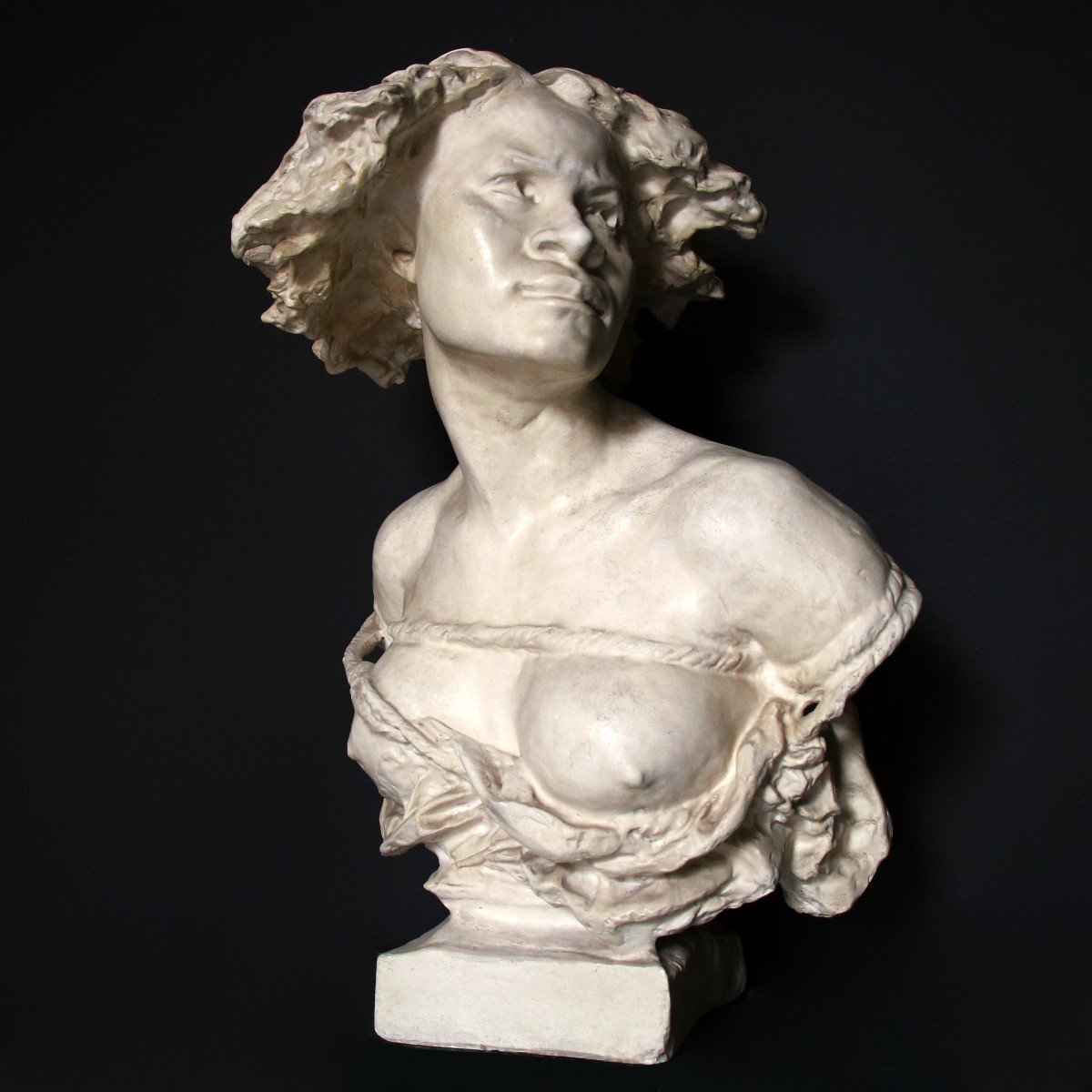
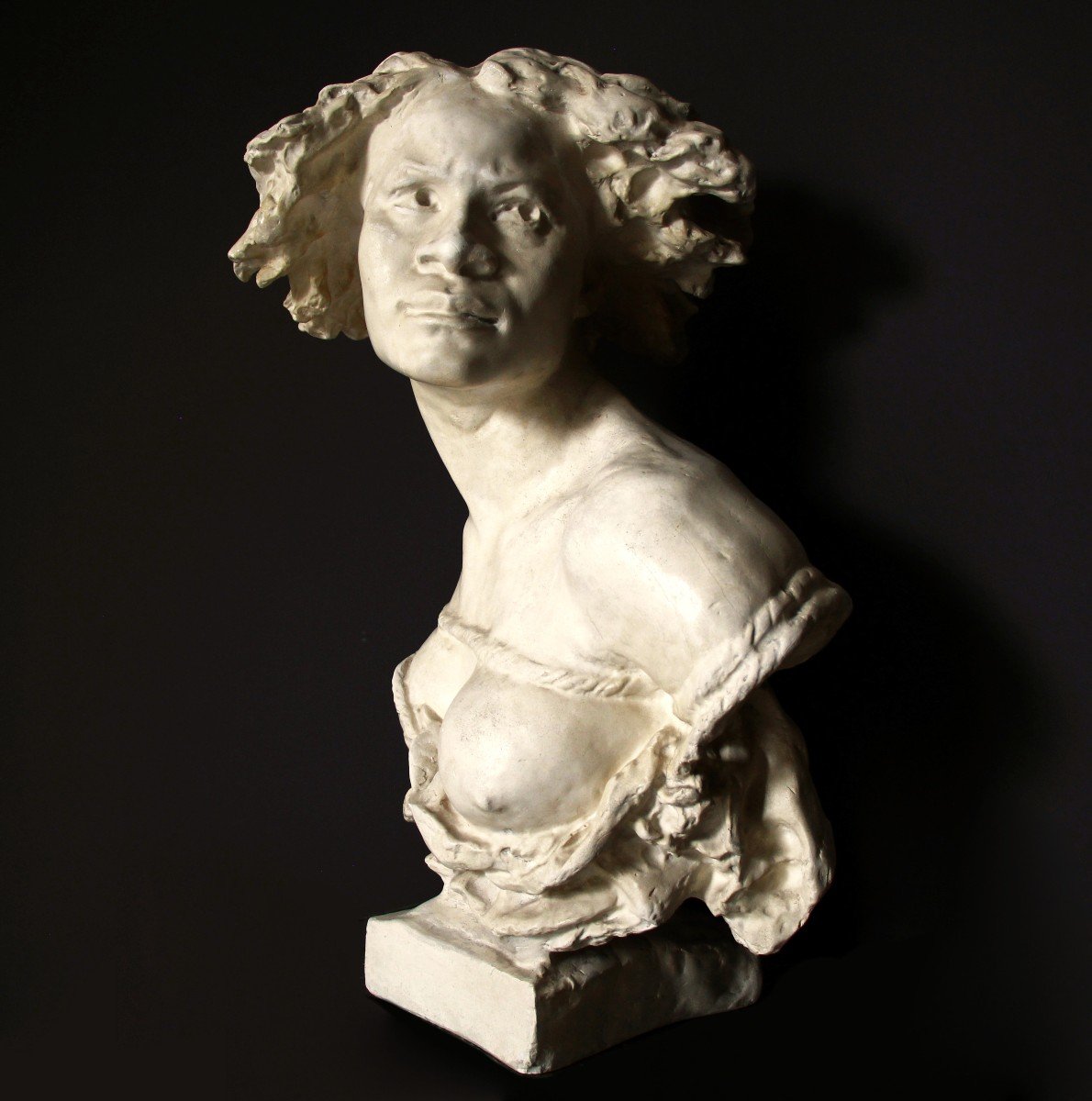
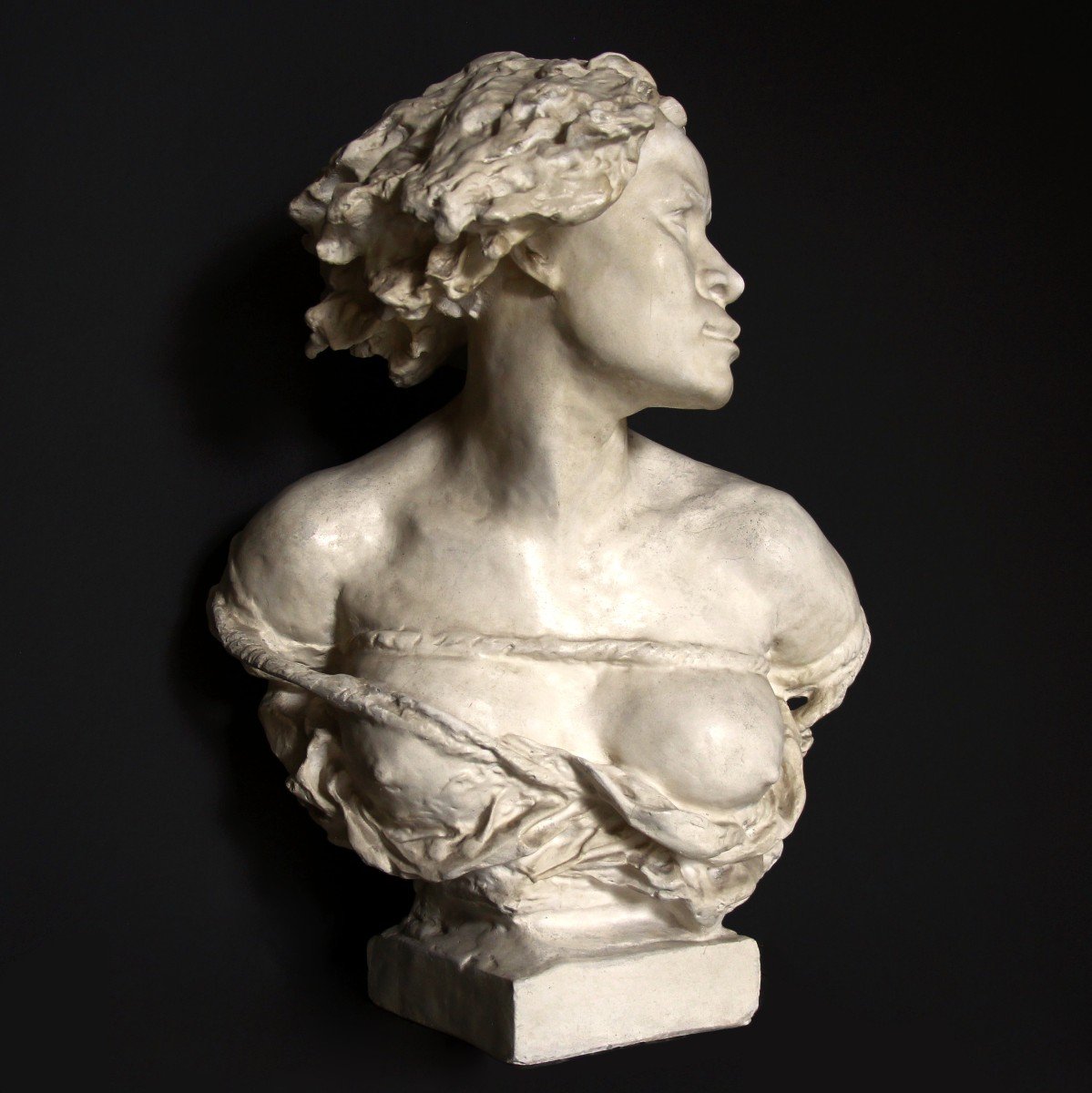
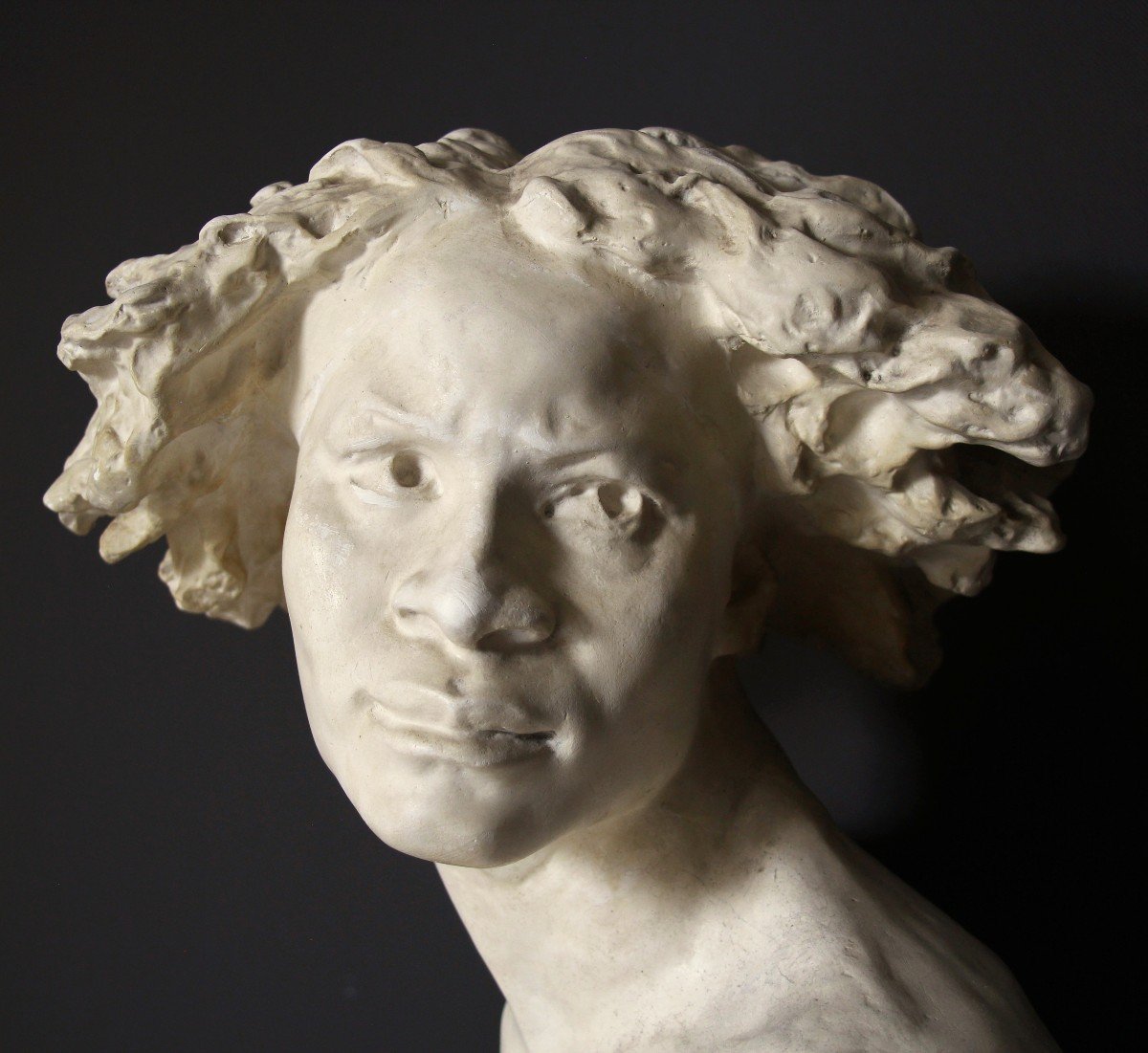
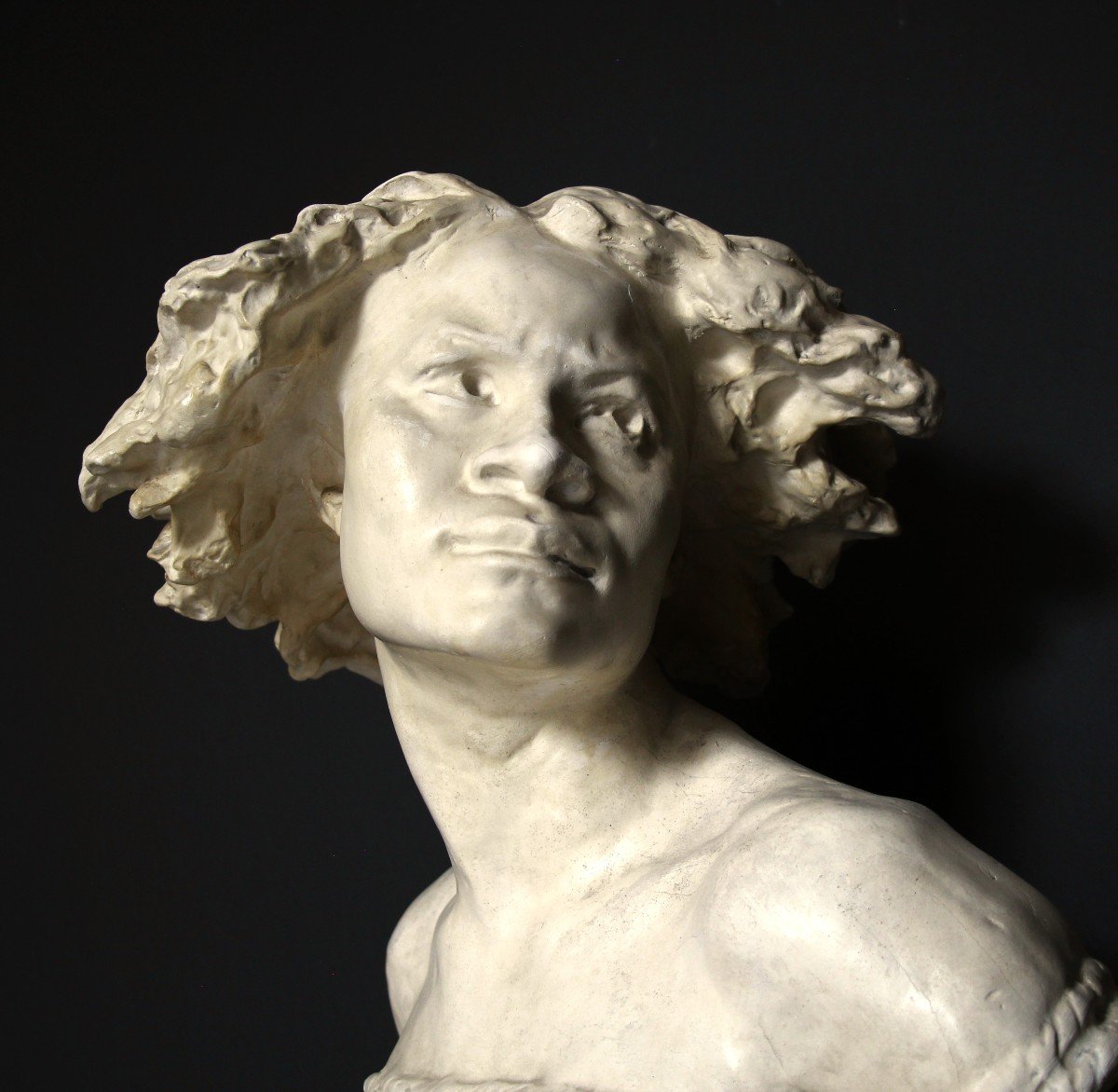
A woman turns her head over one shoulder, her chin lifted and her gaze directed beyond the viewer. Her hair fans out in thick locks, while a rope drawn across her chest holds her upper arms close to her body. The movement of the head against the restraint of the shoulders gives this bust its force. Its pale, warm-toned patina brings out small changes of plane around the mouth and brow. The deeply modeled curls and gathered drapery take the shadow quite differently from the smooth skin.
This unsigned, late 19th-century plaster follows Why Born Enslaved!, known in French as Pourquoi naître esclave !, by Jean-Baptiste Carpeaux (1827–1875). The French sculptor conceived the model in 1868 while working on the figure of Africa for his Paris fountain, The Four Parts of the World. He exhibited the bust at the Paris Salon in 1869. The title gives the woman a question of her own, and the turn of her face is especially telling in profile. The photographs show both sides as well as the frontal view and details of the expression.
From a private collection in France, this example is in good condition. The patinated plaster bust rests on a low rectangular base. It measures 60 cm high, 46 cm wide and 24 cm deep (23.6 × 18.1 × 9.4 in). The photographs show the base in full, as well as the folds of drapery beneath each shoulder. A position with room to view the bust from an angle brings the changing silhouette into focus. Insured DHL Express shipping is quoted separately for the destination.
Artwork details
- Creator
- After Jean-Baptiste Carpeaux (1827–1875)
- Period
- Late 19th century
- Medium
- Patinated plaster
- Dimensions
- H 60 × W 46 × D 24 cm (23.6 × 18.1 × 9.4 in)
- Condition
- Good condition.
- Provenance
- Private collection, France.